

CAREnet – Network for Strengthening Social Science Research on Family Care
The societal importance of family care is increasing in the context of demographic change. Accordingly, there is now a substantial body of social science research on the conditions under which people take on care responsibilities and on the consequences of family care for those who provide it.
Despite this extensive research, important conceptual gaps remain. First, terminology, definitions and approaches to measuring family care differ considerably, making it difficult to compare studies and findings. Second, there is still no overarching theoretical framework that systematically brings together the individual, family, societal and institutional conditions that shape the uptake of care and the domains in which consequences may emerge.
CAREnet addresses both of these gaps. The scientific network further develops shared conceptual foundations and systematically examines how family care is defined and measured across different studies and data sources, including the implications these differences may have for the comparability of findings. At the same time, it develops a life-course-oriented theoretical framework that allows for a systematic structuring of the determinants and consequences of taking on care, considers their embeddedness in different life stages and broader institutional contexts, and helps to identify gaps in existing research.
In addition, CAREnet provides a framework for scientific exchange and long-term collaboration. Researchers from different social science disciplines and several European countries bring together their expertise, develop joint publications and prepare future collaborative research projects.
Duration: 09/2026-08/2029
Funding: DFG
The following staff members at DZA are involved
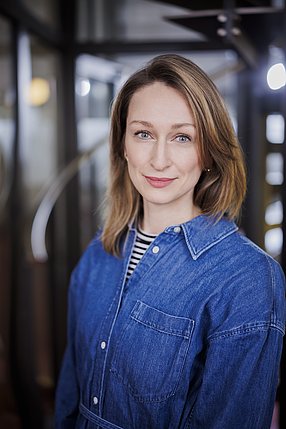
Head
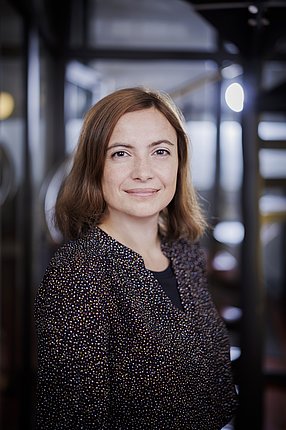
Co-Head
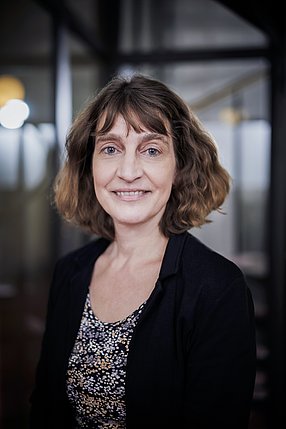
Staff

Student Assistant
CAREnet-Members
| Enrique Alonso Perez (Charité Berlin) | Nadiya Kelle (Deutsches Zentrum für Altersfragen) |
| Ariane Bertogg (Universität Konstanz) | Carolin Kunz (TU Dortmund) |
| Naomi Bader (Universität Mannheim) | Miriam Laschinski (Universität Bremen, Universität Hamburg) |
| Thurid Eggers (Universität Bremen) | Klara Raiber (Radboud Universität) |
| Ulrike Ehrlich (Deutsches Zentrum für Altersfragen) | Alina Schmitz (TU Dortmund) |
| Johanna Fischer (Universität Bremen) | Johanna Schütz (RWU Hochschule Ravensburg-Weingarten) |
| Robert Heidemann (TU Dortmund) | Damiano Uccheddu (Université Libre de Bruxelles (ULB) |
| Lisa Jessee (Universität Köln) | Melanie Wagner (Vienna Institute of Demography) |