![[Translate to English:]](/fileadmin/_processed_/8/0/csm_Forschung_989f311f3b.jpg)
Evaluation Project on Reach and Impact of the Silbernetz Hotline
Loneliness arises when existing social relationships are not sufficient to fulfil basic needs for security, community and respect. While older people are not necessarily lonelier than younger people - especially as long as they remain in good health - they often find it much more difficult to find a way out of this situation. Numerous studies have shown that chronic loneliness can have significant health consequences, such as an increased risk of cardiovascular disease. It is also often accompanied by a decline in social activities and political participation.
Given these far-reaching effects, combating loneliness must be a central goal of both public health care and political action. In 2023, the Federal Government therefore adopted a strategy against loneliness under the leadership of the Federal Ministry for Family Affairs, Senior Citizens, Women and Youth (BMFSFJ). A central component of this initiative is the scientific evaluation of the effectiveness of measures to combat loneliness, as there has been a lack of well-founded studies on this in Germany to date.
In order to close this research gap, the DZA, funded by the BMBFSFJ, is conducting a scientific evaluation of Silbernetz. Silbernetz is an organisation that aims to open up ways out of isolation for people aged 60 and over. The service includes anonymous contact, promotes the development of personal connections and arranges suitable support services in the neighbourhood. Silbernetz's main service is a telephone hotline that enables older, lonely people to have confidential conversations. The project will only evaluate Silbernetz's main service, the telephone hotline.
Summary:
The evaluation project to improve the social participation of older people aims to address two research questions: 1. what is the reach of Silbernetz, how diverse is the group of older, lonely people who are reached? 2. do the conversations with the hotline staff reduce the subjective experience of loneliness, feelings of shame or negative self-images of old age?
ReWiSil (the abbreviation for the German term Reichweite und Wirkung der Silbernetz-Hotline) is designed to be participatory and takes place in close cooperation between the German Centre of Gerontology (DZA) and Silbernetz. The scientific decision-making responsibility lies with the DZA.
Duration: February 2025 to December 2026
Please follow this link to get informationen about Silbernetz.
The key findings of the study will be presented and discussed in Berlin on June 24, 2026, from 9:30 a.m. to 12:00 p.m., as part of the "Gemeinsam aus der Einsamkeit" action week. The event can also be followed via livestream.
Program
| 09:00h | Admission |
| 09:30h | Welcome Introduction to Silbernetz Understanding Loneliness in Old Age: Background and Structure of the Silbernetz Evaluation Addressing Loneliness in Old Age: Who Uses the Silbernetz Hotline and What Impact Does It Have? |
| 10:30h | Panel Discussion with: Sebahat Atli (Spokesperson for Senior Citizens' Issues for the SPD Parlamentary Group at the Berlin House of Representatives) Dr. Oliver Huxhold (German Centre of Gerontology) Dr. Herlind Megges (Federal Ministry of Education, Family, Senior Citizens, Women, and Youth) Elke Schilling (Silbernetz e.V.) |
11:30h 12:00h | Coffee and Informal Exchange End of the Event |
Please click here to register.
For Protection Note/Privacy Policy click here.
The following staff members at DZA are involved
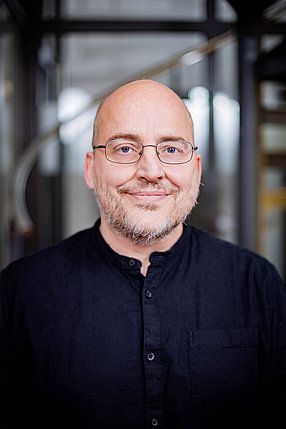
Principal Investigator

Scientist

Scientist

Scientist
Cooperation Partners at Silbernetz:
- Elke Schilling
- Andreas Böttcher
- Heidi Degethoff
- Hans Carl von Werthern
- Tanja Wallrabenstein